
Short answer: Start SEO as a beginner by setting up GSC and analytics, picking one tight keyword cluster, writing 5-8 intent-aligned pages with internal links and schema, and publishing in 30 days. Build pages to answer queries directly in 50-70 words to earn AI citations. Track in GSC and adjust based on impressions and queries.
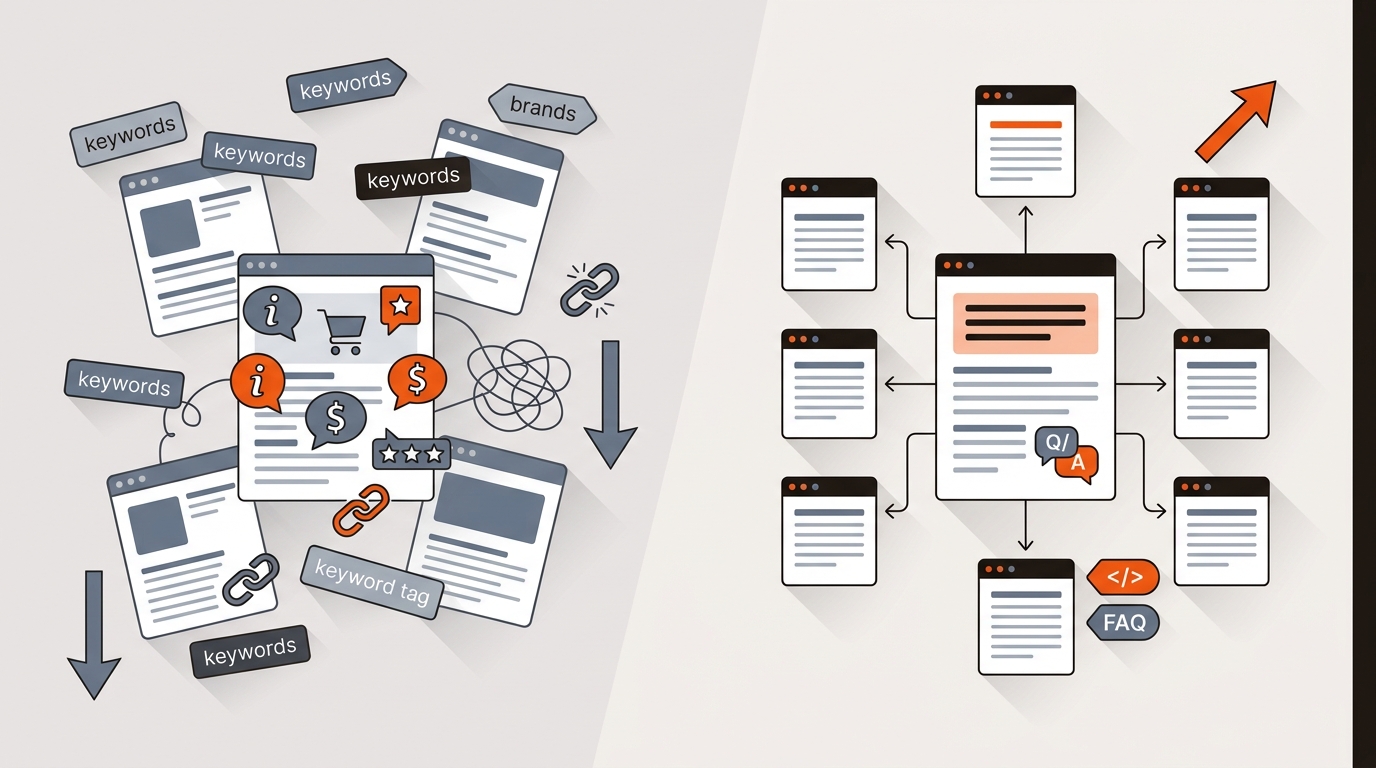
A direct answer near the top of the page and FAQ schema make a page easier for AI systems to extract and cite.
Ship a 4-week plan that starts with GSC and ends with GEO-ready pages.
• Week 1. Setup and Cluster: Connect GSC, GA4, and your CMS. Crawl with Screaming Frog to map current URLs. Use Ahrefs or SEMrush to find a 1-topic cluster (8-12 keywords, KD under 20). Use this SEO checklist for beginners to keep scope tight.
• Week 2. Briefs and Outlines: Create 5-8 briefs with search intent, H2/H3 structure, target snippet (50-70 words), FAQs, and internal link targets. Prioritize bottom and mid-funnel queries first.
• Week 3. Draft, Review, Schema: Draft in Google Docs. Add FAQPage and HowTo schema where relevant. Enforce 1 primary intent per page and 2-3 contextual internal links per post.
• Week 4. Publish and Measure: Publish 2-3 pages early in the week, the rest by day 30. Submit to GSC. Track impressions, average position, and non-brand clicks. Record AI citations weekly if you have access to Perplexity and ChatGPT browsing logs.
If you’re unsure how to pick the cluster, start here to find SEO-friendly keywords. Then pressure-test the plan by verifying KD and SERP makeup; here’s how to find keyword difficulty and filter for feasible wins.
Operational tradeoff: deeper briefs slow you down but reduce rewrites. At under 8 pages, invest in high-quality briefs. Past 25 pages, templatize H2 patterns and schema blocks, or the workflow breaks under review cycles.
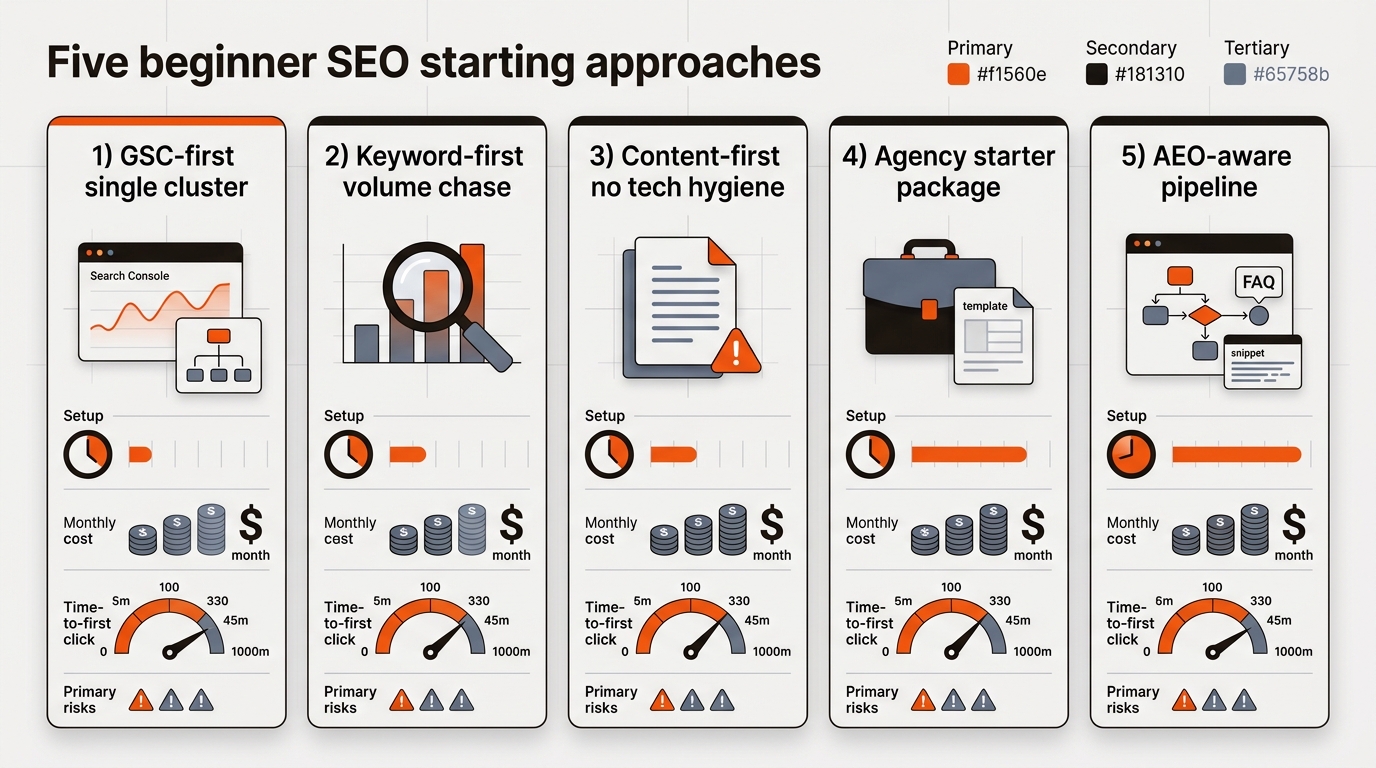
Pick the approach that matches your constraints and gets pages live in 30 days.
caption
You can run this workflow manually, or use Mergeflo to draft AEO-style articles for your review and publish the ones you approve. Mergeflo is an autonomous SEO + AEO content engine: it finds gaps, drafts articles with FAQ schema and suggested internal links, and publishes what you approve to Webflow. It tracks your Google positions and, on paid plans, checks whether ChatGPT, Gemini and Claude mention your brand. See the free plan and the paid plans on the pricing page.
These are the sticking points that slow teams shipping their first cluster.
Pick a single product use case and map 8-12 keywords around it with KD under 20 and clear intent splits (informational vs transactional). Validate SERP types in Ahrefs or SEMrush. If the top 3 results are guides with H2s you can beat, it’s viable. If they’re tools or docs, skip.
Five to eight pages win for beginners. It’s enough to build internal links and topical authority, but small enough to enforce quality and schema.
Two things: a direct 50-70 word answer high on the page and clean FAQ schema. Add concise H2/H3s that mirror user sub-questions and include 2-3 internal links to related intents. Keep sentences simple. In Perplexity and ChatGPT browsing, these pages get cited more because they’re extractable.
Do a 2-hour baseline: verify index coverage in GSC, fix 404s/500s, ensure a single canonical per page, and submit a clean XML sitemap. If your site shows >5% server errors or >10% excluded pages without reason, pause and fix. Otherwise, invest time in briefs and publishing cadence first.
The fastest path from zero to rankings is one tight cluster, extractable answers, and consistent internal links. If you asked how to start SEO as a beginner, this 30-day plan prioritizes what moves rankings and GEO citations soonest: intent, structure, and shipping. Use it, measure weekly in GSC, and iterate on queries that show traction. When you're ready for help with the workflow, Mergeflo finds the gaps and drafts briefs and articles for your review.
