
Short answer: No, crawling is not the same as indexing. Crawling is discovery and fetching of URLs; indexing is processing, deduping, and storing content so it can be retrieved in search. Pages can be crawled yet excluded if Google detects duplication, thin content, or soft 404s. Control crawling with robots.txt; control indexing with noindex, canonicals, or authentication.
If a page is stuck, our Search Console indexing troubleshooting hub matches each status to the guide that fixes it.
Crawling is retrieval; indexing is inclusion. Mixing them leads to the wrong fixes. When a URL shows as Crawled in GSC, many assume it will rank. It can still be excluded during indexing because Google determined it is duplicate, thin, off-intent, or a soft 404 within the cluster you built.
You also control them with different levers. Robots.txt governs crawling only. Noindex, x-robots-tag, canonicals, hreflang, and auth govern indexing. Blocking a problem URL in robots.txt can freeze it in the index because Google cannot recrawl to see your noindex or canonical changes.
Google can index a URL blocked by robots.txt if it is referenced elsewhere. To reliably prevent indexing, use noindex or restrict access. Google Search Central
New URLs can sit as Crawled - currently not indexed for a long time. The fastest fix is rarely a manual index request. It is cluster quality: stronger internal links, canonical consolidation, and removing near-duplicates.
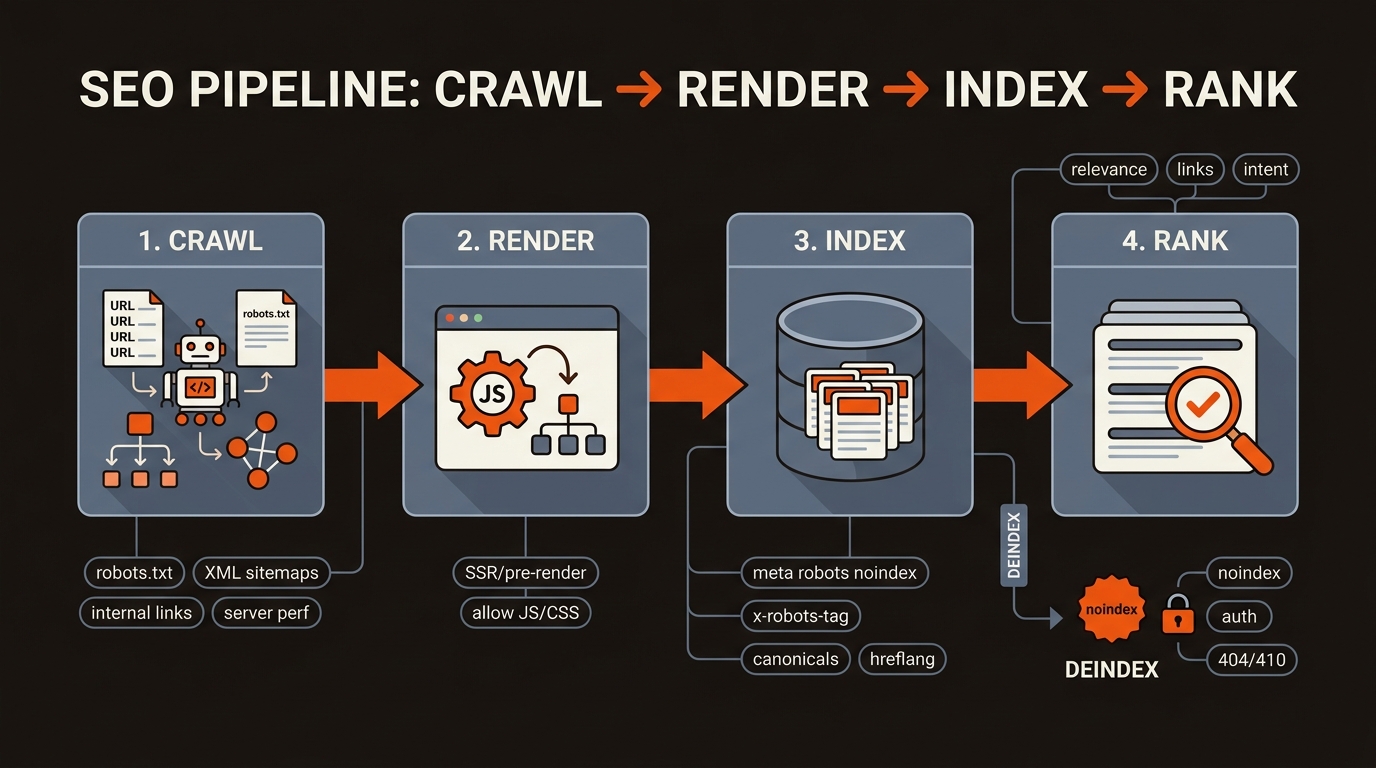
Map each step to a control and a diagnostic, then fix the bottleneck in that step. Treat this as your operational checklist when a page does not appear for target queries.
Crawl-to-index pipeline: controls, debugging, and common failures
Verify fetches in GSC Crawl Stats, inspect rendered HTML, then address coverage reasons before you rewrite copy that already passes intent.
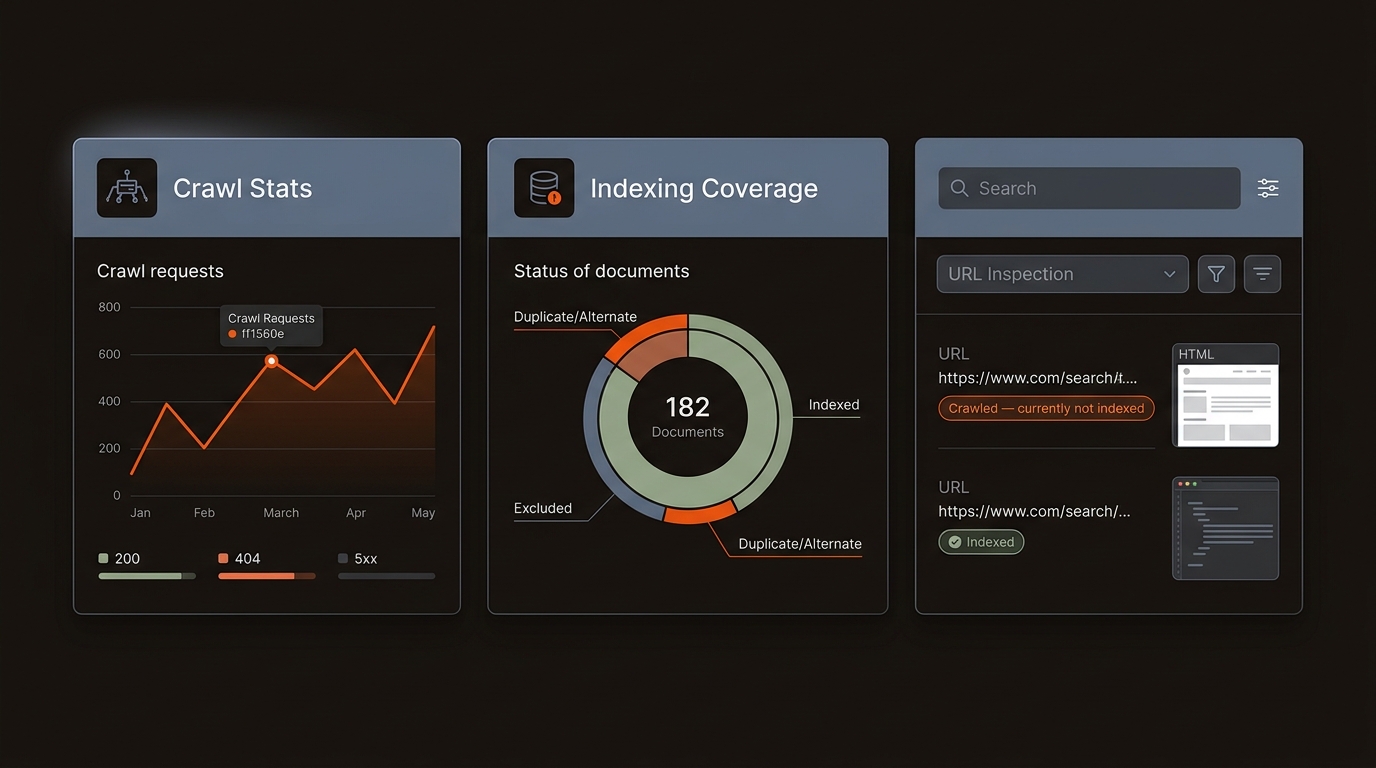
Reference: Google’s pipeline overview is documented in how search works and crawling/indexing docs. See How Search Works.
Indexing accelerates when you ship clusters that clear quality thresholds across the set. If crawled-not-indexed is common, prioritize consolidation and structure: unify duplicates with a single canonical, route internal links from ranking siblings, fix on-page duplication, and add entity/schema clarity so Google picks a canonical and includes it.
Mergeflo helps with the research, drafting and publishing side of this. Our autonomous SEO + AEO content engine finds gaps, drafts articles with FAQ schema and suggested internal links, and publishes the ones you approve to Webflow. It tracks your Google positions and, on paid plans, AI mentions, and suggests internal links within the cluster for you to approve.
For early sites that ask is crawling the same as indexing and get stuck on crawled-not-indexed, start with triage, then ship a tightly linked subcluster. This guide pairs with our explainer on Is It Normal That Some Of Pages Are Crawled But Not Indexed Given My Site Is New.
These are the high-signal operator answers that resolve crawl vs index confusion fast.
Crawl is necessary but not sufficient. Indexing excludes near-duplicates, thin pages, or URLs that resolve as soft 404s. Check URL Inspection for canonicalization and coverage reasons, then fix duplication, improve usefulness, and secure internal links from indexed pages. Revalidate in GSC after you ship changes.
No. Robots.txt prevents crawling. It does not remove a URL from the index. Google can index a disallowed URL based on external references. To remove a URL, allow crawling long enough for Google to see a noindex, return a 404/410, or require authentication.
Confirm fetches in GSC Crawl Stats and server logs. Then run URL Inspection on a sample of affected URLs. If fetch succeeds but coverage shows Duplicate, Soft 404, or Excluded by noindex, the bottleneck is indexing. If fetch fails or is delayed, fix crawl access, sitemaps, and internal links first.
Yes. If key content appears only after client-side rendering and Google cannot render it, indexing may treat the page as thin. Solve with SSR or pre-rendering, ensure JS/CSS are not blocked, and verify rendered HTML in URL Inspection. Measure before and after in GSC to confirm inclusion and query impressions.
