
Cadence wins when it is sustainable, consistent, and tied to signals you can actually measure. The question is not only how often should a startup publish blog posts; it is how to pick a frequency you can keep without eroding quality or burning the team. Set a floor you never miss, then inspect what moves rankings and traffic before you scale volume.
Most advice treats frequency like a scoreboard. It is not. Frequency is a constraint inside a system: capacity, quality gates, topic fit, internal links, and distribution. Use this guide to turn cadence into a workflow you can run every week and adjust with evidence.

Founders and lean growth teams who need SEO momentum without piling on headcount. If you ship content with a small crew and want a cadence you can trust, this is for you. Technical co-founders who prefer systems over slogans will find a repeatable model here.
Missing weeks breaks trust signals with search and stalls compounding traffic. When the calendar slips, crawl patterns drift and internal linking plans get delayed. For a startup clocked by runway, a cadence you can keep protects momentum. The next sections show how to set a durable floor and scale only when quality holds.
Most guides debate weekly totals and skip the workload math and quality gates that make those totals real. Agency blogs also gloss over what to do when indexing lags or clusters are incomplete. This piece focuses on a floor-first cadence tied to signals and a simple weekly loop your team can keep.
Pick the minimum sustainable frequency and defend it with process. A floor is the count you hit every week even when product launches and fundraising collide. Protect it with a small backlog, a fixed outline template, and internal links scheduled before drafting.
Use a simple content map to queue one pillar and supporting posts per cycle. Treat publish-ready as a status: title, H1, H2s, internal links, schema, and a clear search intent are all locked before scheduling.
Frequency is a constraint; quality is the lever. Hold the line on quality while you raise the floor.
Some advice argues against rigid quotas; a better approach is to apply context-aware publishing guidance and lock a floor that fits your capacity.
Quality gates stop frequency creep from turning into thin content. If you have asked why does most content get no traffic from google, the usual cause is missing intent match, weak topical fit, or no internal support.
If you are weighing cadence ranges, pair a pragmatic view on how often to blog with frequency research summaries; then run the gates above before you raise output.
Publish to gather signals; adjust cadence based on what those signals say. Watch query coverage, impressions for cluster terms, internal link reach, average depth per post, and indexing status. When posts earn impressions but few clicks, refine titles and intros instead of adding volume. When indexing stalls, fix crawl issues before scaling output.
When quality holds and signals rise across a cluster, increase frequency by adding one more support post per cycle. If impressions spread to more queries in the cluster, finish cross-linking before opening a new cluster. For timing mechanics behind week-by-week adjustments, see a deep dive on startup SEO publishing cadence.
Example scenario: a founder-marketer pair that ships two support posts each week struggles when a product launch lands. Say they keep the floor by converting one slot into an update for an existing pillar with two new H2 sections and fresh internal links. This protects indexing momentum and cluster coherence without new drafting time.
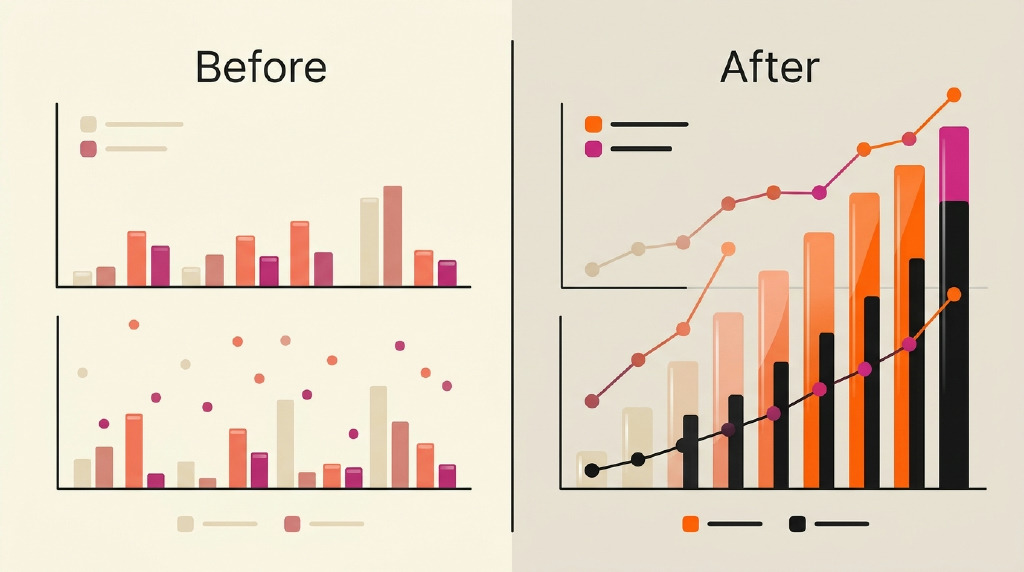
Match frequency to real capacity.
| Team Shape | Floor Cadence | Content Mix | Failure Mode |
|---|---|---|---|
| Solo founder | One per week | Evergreen supports | Skips internal links |
| Founder + marketer | Two per week | One support, one update | Quality drift under load |
| Small content pod | Three per week | Pillar + two supports | Thin supports without briefs |
| Rev/PLG team assist | Two to three per week | Product-led posts | Over-index on features |
| Agency assist hybrid | Variable | Pillars in-house, supports assisted | Voice inconsistency |
| Technical co-founder | One per week | How-to with schema | Underplays distribution |
Tradeoff to note: speed versus depth. Many thin articles lose to fewer thorough ones that anchor a cluster. Raising cadence only works after gates and signals confirm depth holds.
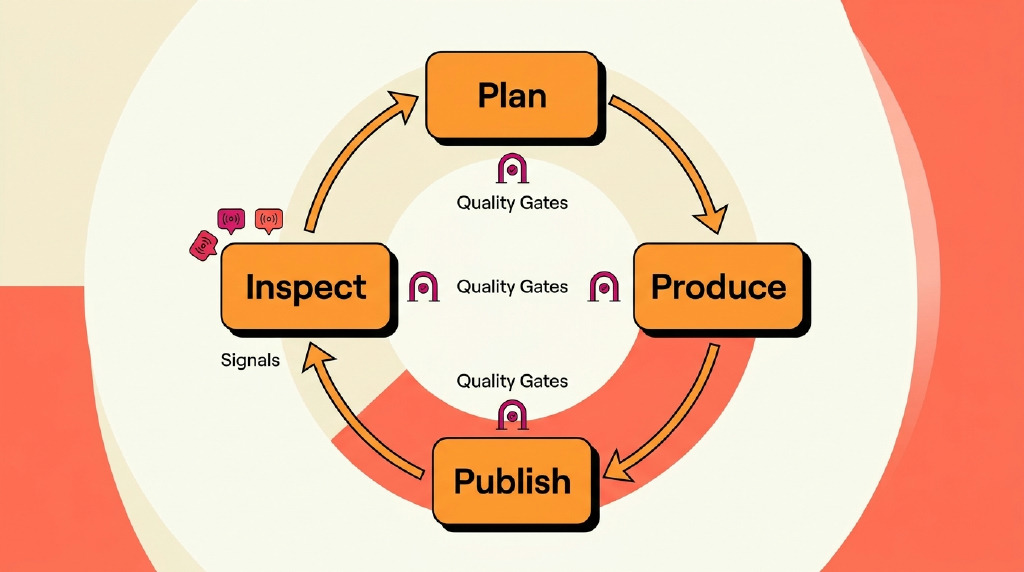
This guide's framework, the Cadence Optimization Loop, turns publishing into a weekly system. It is a four-part loop: Plan, Produce, Publish, Inspect. Plan selects topics that reinforce a cluster and drafts internal link targets. Produce applies quality gates and schema to each draft. Publish ships on a fixed day and updates cross-links. Inspect reads signals and decides whether to keep, improve, or scale. Tradeoffs: raising volume without finishing clusters blunts authority; skipping Inspect locks in waste; overlong drafts delay consistency.
Run the math before you set frequency. Suppose your floor is two posts per week, so four weeks take 2 x 4 = 8 posts. Say each post needs two hours of drafting, so eight posts take 8 x 2 = 16 hours. Suppose each post needs one hour for edits, links, and schema, so eight posts take 8 x 1 = 8 hours. Say the monthly backlog grooming takes four hours, so one month adds 4 hours. Add the steps: 16 + 8 + 4 = 28 hours.
Fix crawl and index issues first or extra posts will not surface. If you are seeing crawled but not indexed or discovered currently not indexed in Search Console, tackle thin duplication, weak internal links, and missing canonical tags.
When ready to automate repeatable steps, study automated SEO workflows for startup efficiency.
Cadence compounds faster when posts are findable across Google and AI answers. Use clear entities, FAQs, and citations so generative results can attribute. Map each post to a question and an entity, add schema, and include a source list. For channel distinctions, see AEO vs GEO vs SEO for startups.
Only AI-citable content; no manual code or CMS integration Templates needed. If leadership asks what part of the funnel SEO supports, align the calendar so pillars answer consideration tasks and supports capture discovery questions. This keeps cadence tied to outcomes instead of vanity volume.
A calendar without a loop decays; a loop without capacity breaks. Assign ownership for Plan, Produce, Publish, and Inspect, and timebox each step. Publish on set days, review signals on the same day each week, and upgrade the floor only after a cluster is complete and indexing is healthy.
Mergeflo is an AI search visibility platform for startups seeking to rank on Google and earn AI citations. Mergeflo helps teams publish consistently with quality gates, schema, and internal links baked into a repeatable workflow. Mergeflo reports Mergeflo builds content briefs from live search demand.
Start with the smallest cadence you can keep every week for a quarter. Protect it with a backlog, briefs, and review slots. Publish on fixed days, finish clusters before raising volume, and watch signals. If quality holds and impressions expand across the cluster, add one support post per cycle. This answers how often should a startup publish blog posts with a sustainable plan.
Pause increases and fix foundations. Inspect internal links to ensure each post has multiple relevant inbounds. Check canonical tags and duplication risks. Strengthen topical fit by adding missing support posts and FAQs around the pillar. Use Search Console to test live URLs and request indexing. Improve titles and intros for intent, then resume cadence once signals move again.
Yes. Deep pillars demand more hours and slow throughput, while support posts keep the calendar green. Map topics into clusters, alternate one pillar with supports, and avoid starting new clusters until the current one has coverage and cross-links. If signals show growth across the cluster, expand cadence by a single support slot and re-check quality.
Use a non-negotiable brief: target query, search intent, outline with H2s, internal link targets, schema type, and a worked example or artefact. Draft to the job-to-be-done. Ship only when the gates pass. If time is tight, publish a substantive update to an existing post with new sections rather than a thin net-new piece.
A cadence that finishes clusters, enforces gates, and adapts to signals will outrun any vanity total. The real answer to how often should a startup publish blog posts is: as often as your system can deliver quality, every week, without fail.
